


Command The Morning
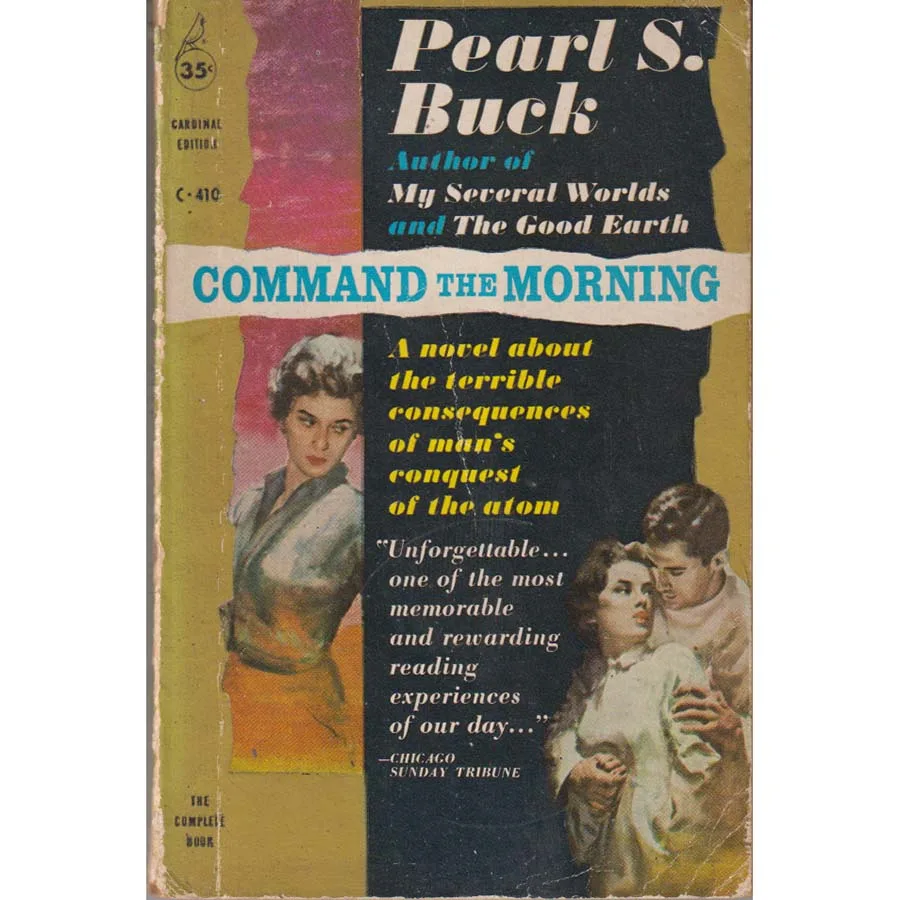
Publisher: Cardinal
Format: Paperback
ISBN: none
Command the Morning (1960 Cardinal edition) by Pearl S. Buck. ISBN: None. Condition: Good.
Some paperbacks shout their intentions from the cover. Command the Morning practically grabs you by the lapels.
There is the dramatically lit embrace. There is the elegantly worried woman looking somewhere into the middle distance. There are solemn promises about "the terrible consequences of man’s conquest of the atom." And, lest you should remain unconvinced, a newspaper assures us that this will be one of the most rewarding reading experiences of the age. It is glorious, unapologetic mid-century paperback theatre.
Fortunately, the novel behind the cover has considerably more substance than its melodramatic packaging might suggest.
Pearl S. Buck is, of course, far better known for The Good Earth, but Command the Morning tackles a very different landscape. Written in the uneasy years following the dawn of the nuclear age, it explores what happens when humanity acquires astonishing scientific power without necessarily acquiring the wisdom to use it. It asks questions that must have felt deeply urgent in the 1950s and, rather inconveniently, continue to feel rather relevant today.
That is one of Buck’s strengths. She was never especially interested in gadgets or grandstanding. Instead, she focused on people—how they cope, how they love, how they disagree and how ordinary lives become entangled with extraordinary events. Even when discussing subjects as immense as atomic power, her attention remains firmly fixed on the human consequences rather than the machinery itself.
Reading the novel now also provides a fascinating glimpse into the anxieties of its time. The world had entered the Atomic Age with tremendous optimism and an equally tremendous sense of dread. Electricity might become almost limitless. Medical science might leap forward. Or civilisation might accidentally vaporise itself before teatime. It was an era in which scientific progress and existential panic travelled together rather like unwilling companions sharing the same railway carriage.
The Cardinal paperback edition captures that mood beautifully. Modern covers often strive for elegant minimalism, perhaps featuring a lonely tree or an inexplicably distant figure standing on a cliff. Mid-century publishers had no patience for such restraint. They preferred painted artwork bursting with emotional intensity, accompanied by enough dramatic typography to convince even the most casual browser that history itself depended upon the next page being turned.
It is impossible not to admire them for it.
This copy remains in good condition, preserving all the irresistible charm of vintage American paperback publishing. The cover shows exactly why collectors love these editions so much: bold colours, expressive artwork and the unmistakable confidence of an era when publishers believed subtlety was something best left to the author. It looks every inch the novel that might once have been tucked into a coat pocket for a train journey, read under a bedside lamp or exchanged between friends with the simple instruction, "You really ought to read this."
Whether you are a collector of Pearl S. Buck, an enthusiast for Cold War fiction, or simply someone who appreciates classic paperbacks with artwork that promises romance, catastrophe and profound moral reflection all before Chapter Two, Command the Morning is a thoroughly engaging find.
From Crappy Old Books—because sometimes the cover confidently predicts the end of civilisation while simultaneously suggesting there might also be time for a complicated love triangle. Modern publishing rarely attempts that sort of multitasking. Thankfully, 1960 had absolutely no such inhibitions.
Keep browsing: See more Fiction books Other books by Pearl S Buck
